
Boltless shelving components work as a matched structure. Shelf panels carry the stored goods, beams and any intermediate supports carry the panels, and the beam connections transfer load to the uprights and floor. The connection profile, shelf span and support arrangement must match the model being quoted.
For importers, distributors and project buyers, the task is to confirm that the specified parts, assembled sample and load information describe the same configuration. A shelving unit that fits together during assembly does not, by itself, establish its load capacity.
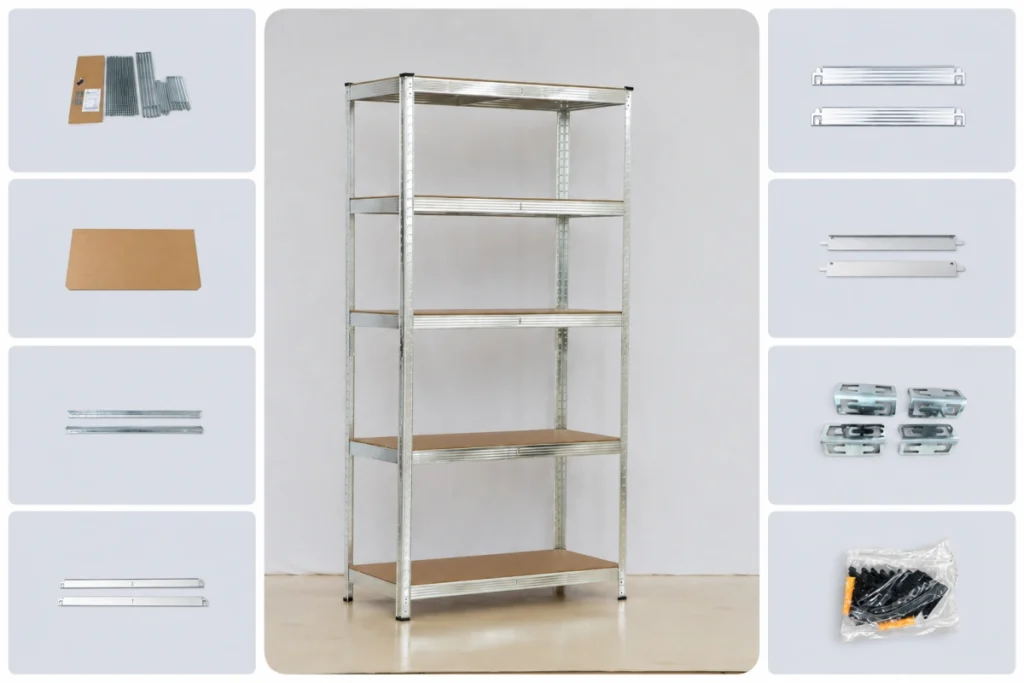
Start with the Complete Shelving Configuration
Before checking individual parts, identify the complete unit being purchased. The specification should state:
- The product model and drawing or specification revision.
- Overall width × depth × height in millimetres, with usable shelf dimensions identified separately where needed.
- The number and positions of shelf levels.
- Upright and beam profiles, shelf material, finish and required supporting components.
- The required load per level, maximum total bay load and loading conditions.
The quotation should identify which components are included in the stated price and which accessories are optional.
These details are connected. A wider shelf may require a different beam section or support arrangement. A different panel material may require a review of its support and seating details. Checking steel thickness alone does not establish the performance of the complete unit.
Check the Uprights and Sectional Post Joints
Uprights are the vertical members that carry forces from the shelf connections towards the floor. Their profiles, slot patterns and slot spacing also determine which beams can connect and where shelf levels can be positioned.
Two uprights of the same height can use different folded sections, material specifications or connection details. Ask for the profile reference and the dimensions needed to identify the quoted part.
Keep the thickness measurement basis clear. The supplier should state whether a quoted thickness refers to the base steel or the finished coated component, together with any agreed tolerance and measurement method. Measurements taken on different bases do not provide a reliable comparison.
Where uprights are supplied in sections, confirm the matching post connector, engagement detail and joint position. The connector must suit the specified upright sections and assembled layout. A replacement connector should not be accepted solely because it appears to fit.
Compare the visible slots on standard keyhole boltless shelving with the inner connection on hidden-hole double-upright shelving. Use the exact upright profile and connector reference when ordering parts.
Match the Beams to the Upright Connections
Beams support the shelf surface and transfer its load through their end connections into the uprights. Their cross-section, span and connector details therefore matter alongside their length and material thickness.
Check whether the stated beam length describes the component itself or the assembled shelf span. The specification should also identify the beam section, end connector and any reinforcement or intermediate supports.
QDDOWELL’s boltless shelving range distinguishes Slot-In, Keyhole, Hidden-Hole and T-Hole straight shelving designs. These names identify different ranges; they do not establish that parts are interchangeable between models or suppliers.
At the beam-to-upright joint, the hooks, tabs or other connecting features must engage as specified in the model’s assembly instructions. A connector entering a slot is only the start of the check: it must reach its intended seated position, and any specified retaining or locking part must be fitted.
Follow the instructions for the selected model, including the required tools and fixings. The word “boltless” is not a complete installation method.
Match Shelf Panels and Supporting Components
Shelf panels form the storage surface, but their suitability depends on the supports beneath them. Confirm the panel dimensions, bearing edges, unsupported spans and support positions as one arrangement.
MDF and Chipboard Panels
MDF and chipboard are different materials and should be identified correctly in the specification. Confirm the board type, thickness, dimensions, edge condition and suitability for the intended storage environment.
A thicker board does not automatically increase the capacity of the shelf level. Its span and supporting structure still need to be suitable.
Steel Panels and Wire Mesh
For steel panels, check the formed profile, folded edges, number of panel sections and method of support. Flat sheet thickness alone does not describe the finished panel structure.
For wire mesh, confirm the mesh opening, wire and support arrangement, edge construction and seating details. The goods must also suit the surface: small items or narrow feet may need a different arrangement from cartons with a broad base.
Panel alternatives should be confirmed for the selected model rather than treated as direct replacements.
Supports, Feet and Locking Parts
Depending on the design, the configuration may include centre supports, side supports, bracing, post connectors, feet, baseplates or retaining devices.
Each part has a specific role. A centre support may reduce an unsupported panel span, while a post connector joins upright sections. Protective feet and structural baseplates should not be treated as interchangeable parts.
Use the component list and assembly instructions to establish which fittings are required. Do not omit a specified support or locking part because it looks like a minor accessory. Floor or wall fixings should follow the selected model’s instructions and the requirements of the installation site.
How Boltless Shelving Components Transfer Load
For a typical beam-supported shelf, the simplified load path is:
Stored goods → shelf panel → supports and beams → beam-to-upright connections → uprights → specified feet or baseplates, where fitted → floor
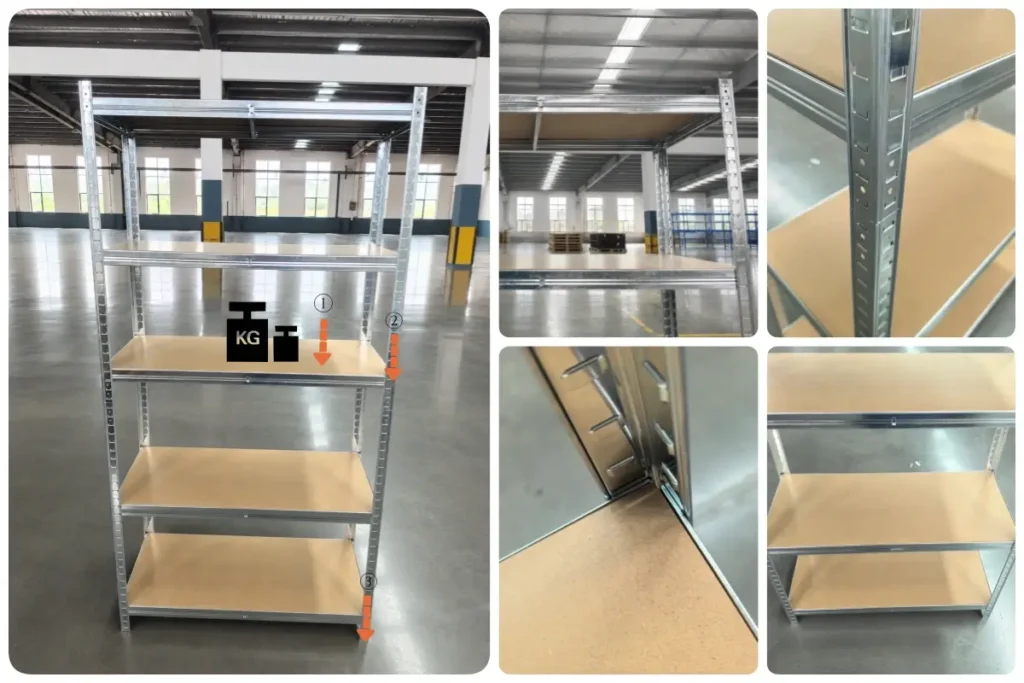
Illustrative load path for the shelving shown; the arrows do not establish a load rating.The exact arrangement depends on the model. Each connection and supporting member needs to suit the approved configuration.
Check Per-Level and Whole-Bay Ratings
A per-level rating should identify the complete shelf level, including its panel, beams and required supports. A rating for one panel or one beam is not automatically the rating for the complete level.
The maximum bay load applies to the assembled unit under its stated layout and installation conditions. Obtain both the per-level and total bay limits. Multiplying a per-level figure by the number of shelves does not establish the permitted bay load.
Confirm How the Weight Is Distributed
A uniformly distributed load, or UDL, spreads weight evenly across the shelf surface. Items resting on small feet or over a limited contact area place a different load on the panel and supports.
State concentrated loads separately and ask the supplier to confirm their suitability. Do not apply a UDL rating to a different loading pattern without confirmation.
Changes to shelf span, panel material, supports, connections or level positions may require the load basis to be reviewed. Adding stored goods on additional levels increases the total stored load; adding empty shelves does not establish a higher allowable bay load.
Ask which drawing, configuration and loading conditions the supplied test report, calculation or other capacity information covers. Our guide to steel shelving load capacity explains these distinctions in more detail.
For US warehouse projects, OSHA’s warehousing guidance provides a general workplace-safety reference. It does not establish the capacity of a particular shelving model.
Use Sample Assembly to Check Component Fit
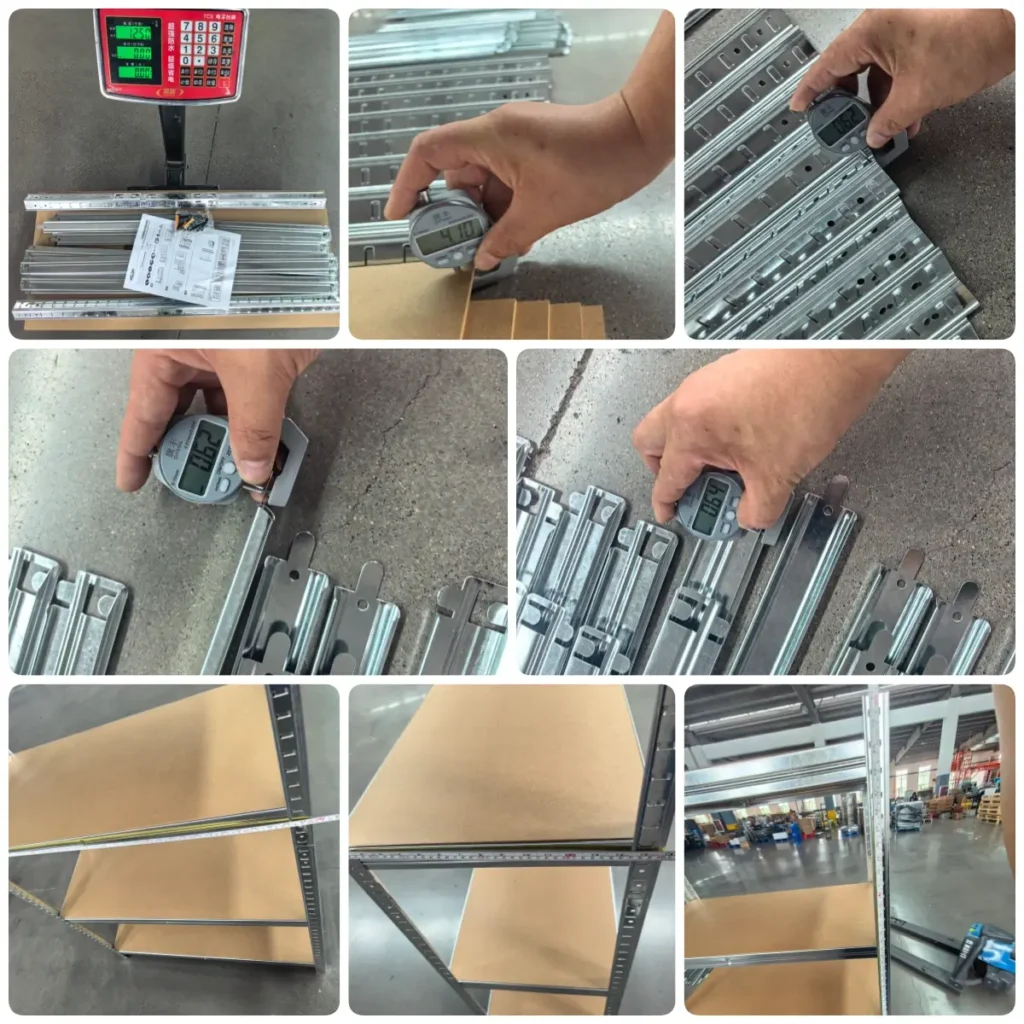
For a new or revised configuration, arrange sample assembly using parts representative of the proposed order. Separate dimensional checks can identify individual deviations, while assembly helps reveal how the parts fit together.
Use the model’s instructions and agreed acceptance criteria for the checks.
| Check | What to confirm |
|---|---|
| Uprights and post joints | Correct sections and connectors; joints align in their specified positions |
| Beam connections | Correct engagement and seating; specified retainers can be fitted |
| Shelf panels and supports | Panels seat correctly; required supports are present and correctly positioned |
| Overall layout | Dimensions and shelf positions match the approved reference; the unit is correctly positioned and levelled |
| Parts and instructions | The supplied parts, quantities and assembly sequence match the selected model |
Investigate unexplained assembly difficulty, misalignment or connections that do not seat as intended. Do not resolve a mismatch by altering slots, bending connectors or omitting fittings without the manufacturer’s approval.
Record critical measurements, connection photographs and any agreed changes. Photographs help identify the sample, but they should accompany the written specification.
Sample assembly checks fit and configuration. Capacity requires separate verification against the relevant load information; an unloaded sample is not a load test.
Keep One Approval Record for the Complete Configuration
Keep the purchasing reference in one dated approval record. It should link:
- The model and approved drawing or specification revision.
- The component list, including part references and quantities per unit.
- The matching assembly instructions.
- The applicable capacity information and loading conditions.
- The sample review record and agreed component packing details.
For custom sizes, finishes, branding or packing, the OEM shelving order guide explains how these decisions can be kept together before production.
Any proposed change to an upright, beam, panel, connector or support should be reviewed against the approved configuration. Update the relevant documents and confirm whether the change affects assembly, load information or packing before accepting the substitution.
Similar-looking units may have different prices because their sections, connections, panels or included supports differ. Resolve those technical differences before comparing the commercial offer. The guide to comparing shelving quotations covers pricing units, packaging and delivery terms.
Frequently Asked Questions
What information is needed to order replacement components?
Provide the original model or order reference, component code where available, key dimensions and clear photographs of the upright slots and connecting parts. Include the drawing revision if available.
The supplier should confirm compatibility with the existing configuration. Matching overall dimensions or appearance is not sufficient.
Does a thicker shelf panel increase the capacity of the whole unit?
Not automatically. A different panel may change the performance of the shelf surface, while beams, connections or uprights may remain limiting factors. Use an updated rating for the complete approved configuration rather than increasing the stated capacity from panel thickness alone.
Confirm Your Boltless Shelving Configuration
Send QDDOWELL your product reference, required width × depth × height, shelf levels, goods to be stored and load requirement, including how the weight will be distributed. Add the preferred panel, finish, order quantity and destination market.
For replacement parts, include the existing model details and connection photographs so that compatibility can be reviewed.