
Before requesting a quote, prepare one OEM shelving specification for each configuration you want priced. State what the shelving will hold, its assembled size and shelf layout, the required load, and the materials, finish and packing to include. Give the quantity for each version and flag details that still need supplier confirmation.
Ask the supplier to identify the specification revision used for the quote and list any proposed changes. After checking the sample and packing, issue one approved version for production and inspection.
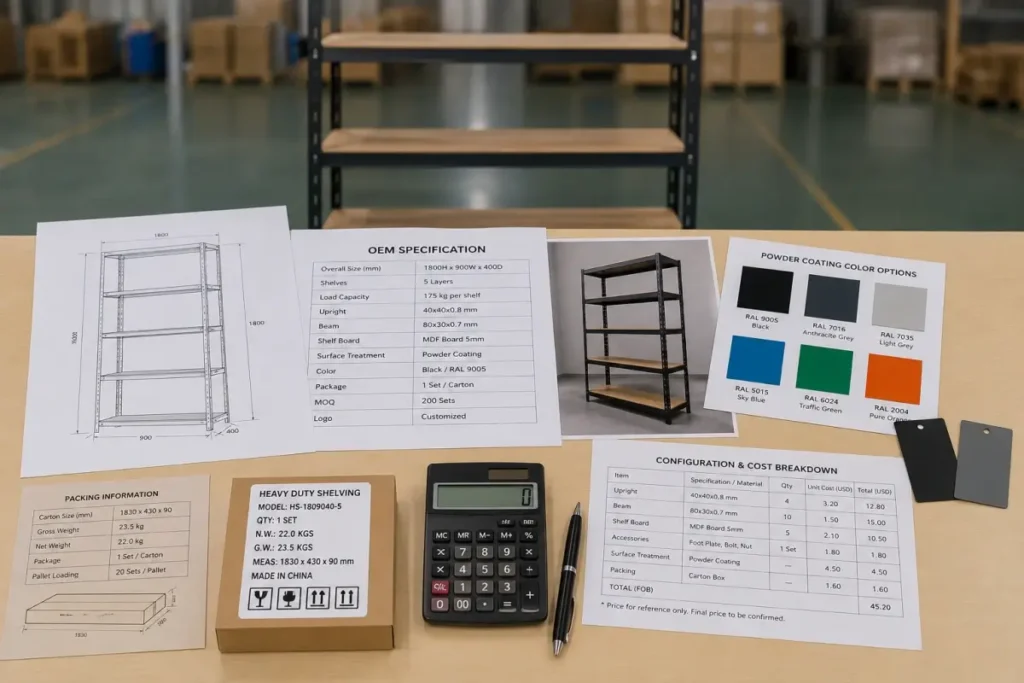
Define the Product Application First
Tell the supplier where the shelving will be used, what it will hold and how it will reach the end user. Include the size and weight of typical stock, the intended environment and the destination market. State the sales channel if it affects the order. A retail unit may need a printed carton and assembly instructions, while a distributor receiving flat packs in bulk may prioritise component identification and carton counts.
If you are adapting an existing model, give its model number, drawing or sample reference. List the changes you want and identify which features the supplier may propose alternatives for.
Specify Dimensions, Structure and Load
Give Assembled and Usable Dimensions
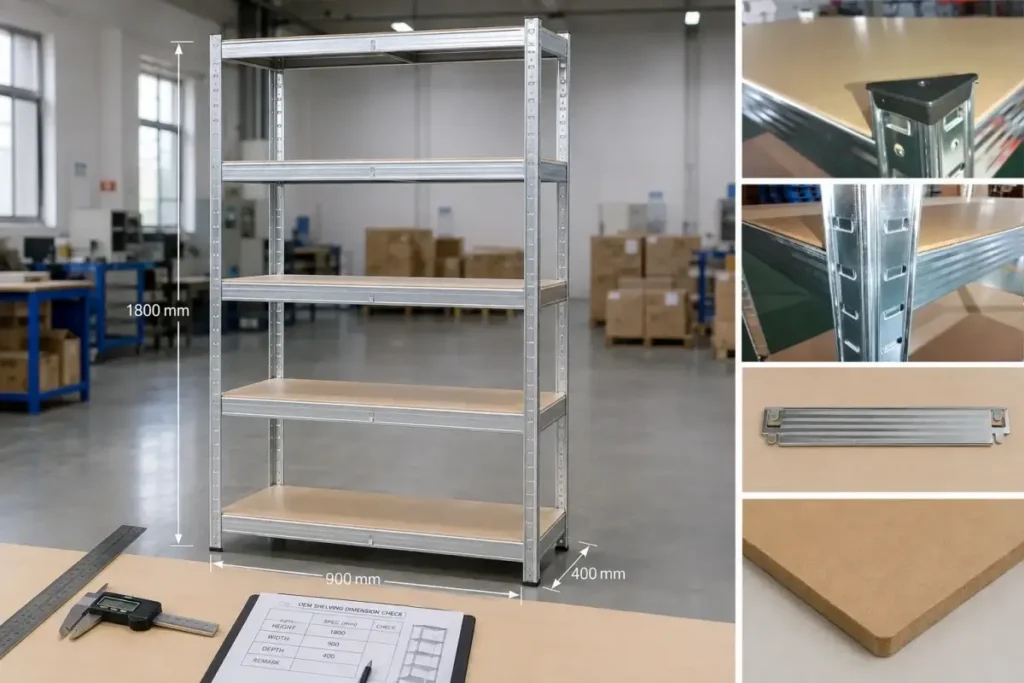
State the overall assembled width × depth × height in millimetres. Say whether the height includes feet or caps. Record the usable shelf width and depth, the number of shelf levels and the clear height between them. Indicate whether that count includes the top shelf. For adjustable shelves, give the intended positions or spacing and ask the supplier to confirm the available adjustment increments. Flag critical dimensions and tolerances on the drawing.
Match Components as a Set
Identify the upright and beam profiles, their connection system, the shelf panel and the number and positions of supports. Record material thickness against the specific component. Two beams with the same nominal thickness can have different profiles or unsupported spans, so use the drawing or part reference when comparing them. For sectional uprights, include the joint and connector in the specification. See how boltless shelving components work together for the fit between parts.
State the Load Basis
Give the required working load per shelf level and ask for the permitted total load for the unit or bay in the proposed arrangement. A uniformly distributed load (UDL) is spread evenly over the shelf. If stock bears on small feet, skids or a limited area, give the weight and contact footprint so the supplier can assess the concentrated load separately.
Illustrative enquiry. A buyer requests 175 kg per shelf level under UDL for a five-level unit measuring 900 mm W × 400 mm D × 1,800 mm H. The supplier still needs to confirm the working rating for the quoted beam span, panel, uprights and supports, and the allowable total load when several levels are loaded.
Ask the supplier for the rating and supporting reference for the exact configuration. Record any test result separately from the declared working rating. If the span, panel or supporting parts change, ask the supplier to reconfirm the rating. See the steel shelving load capacity guide for the difference between shelf-level and unit ratings.
Record Finish, Packing and Order Quantities
Specify the Shelf Panel Material and Finish
Give the shelf panel material, thickness and support arrangement. If the shelves will be exposed to moisture or frequent cleaning, describe those conditions so the supplier can assess the proposed panel and finish. Identify which steel parts are powder-coated or galvanised, as applicable. For a custom colour, provide an agreed colour reference or approved coated sample.

Quote Packing and Accessories Explicitly
List standard, optional and spare parts separately. For packing, give the required format, units per carton, internal protection and any pallet requirements. Ask the supplier to confirm packed dimensions and weights for the proposed configuration. Where labels, carton artwork or instructions are required, record the file version, language, position and person responsible for approval. Use the OEM packaging checklist when preparing the packed sample.
Give quantities by model, size, colour, shelf panel or packing version wherever those details change the item being quoted. Ask for the pricing unit, currency and any separate sample or tooling charges. If an Incoterms® rule is specified, include the named place or port and the rules edition.
Build One OEM Shelving Specification Sheet
Use one row per requirement in your working sheet. Give the buyer requirement, supplier confirmation, and any deviation and its approval status separate columns. Ask the supplier to mark each line as confirmed, proposed change or pending, with a drawing or file reference where relevant.
| Item | Buyer specifies | Supplier confirms |
|---|---|---|
| Model and dimensions | Reference model, overall size, usable dimensions and level positions | Drawing number and revision for the proposed configuration |
| Structure and loads | Stored goods, working load and contact footprint | Matched components, per-level and total load ratings, and the conditions that apply |
| Materials and finish | Shelf panel, finish by component and colour reference | Material details and the finish or sample reference used in the quote |
| Packing and documents | Carton format, protection, labels and instructions | Pack quantities, packed dimensions and weights, and included documents |
| Quantity and quote scope | Quantity by version, destination and delivery basis | Pricing unit, included items, options and separately priced charges |
If the supplier proposes a different beam, record the proposed part, why it changed, and any effect on the rating, fit, packing or price. Keep open items visible when comparing offers. The guide to comparing shelving quotations explains how to review those differences on a common basis.
Approve One Final Version Before Production
Check a representative assembled sample against the agreed drawing and parts list. Verify dimensions, beam engagement, panel fit, support positions, accessories and finish. Where packing is part of the order, check the packed sample against the agreed carton contents, protection and approved artwork. Record the sample reference and check any load rating against the supporting documentation.
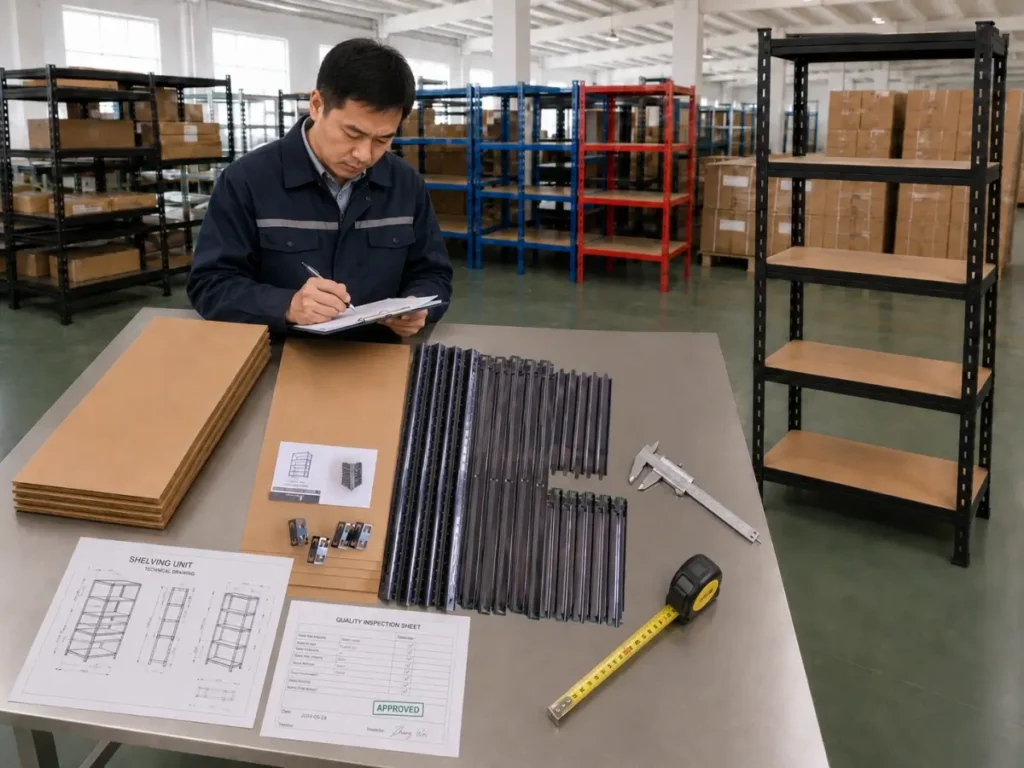
If the drawing, sample or specification differs, resolve the discrepancy and record the agreed change. Before production, issue one approved revision with the model number, revision date and references to the drawings, parts list, sample and artwork that apply. For example, V1 can be the enquiry, V2 the revision after supplier review, and V3 the version approved for production. Give the buyer, supplier and inspection team the same approved version.
Frequently Asked Questions
Do I need a technical drawing for the first quote?
For an initial quote, a dimensioned sketch, photos or an existing model reference may be enough if the supplier can identify what to price. For custom dimensions or connections, agree a dimensioned drawing or equivalent technical record before approving production.
Can I request a quote before the carton artwork is ready?
Yes. State the carton format, print requirements and label positions you know, and mark the artwork as pending. Ask the supplier to identify the printing assumptions used in the quote. Approve the final artwork against the agreed carton before printing.
Send Your OEM Shelving Specification
Send QDDOWELL your specification or share the target dimensions, stock and load requirements, order quantity and destination market. Include any drawing or sample reference and the packing format if known.