
Specify storage shelving export packaging against the approved product configuration and the way it will reach the customer. Record the contents of each carton, internal protection, carton construction, packed dimensions and weight, identification files and approval reference before releasing the order for production.
A correctly manufactured shelving unit can still arrive with damaged panels, scratched steelwork or missing fittings. The aim is not the most expensive carton: it is a package that protects the correct components through the agreed handling route, at a known packing and freight cost.
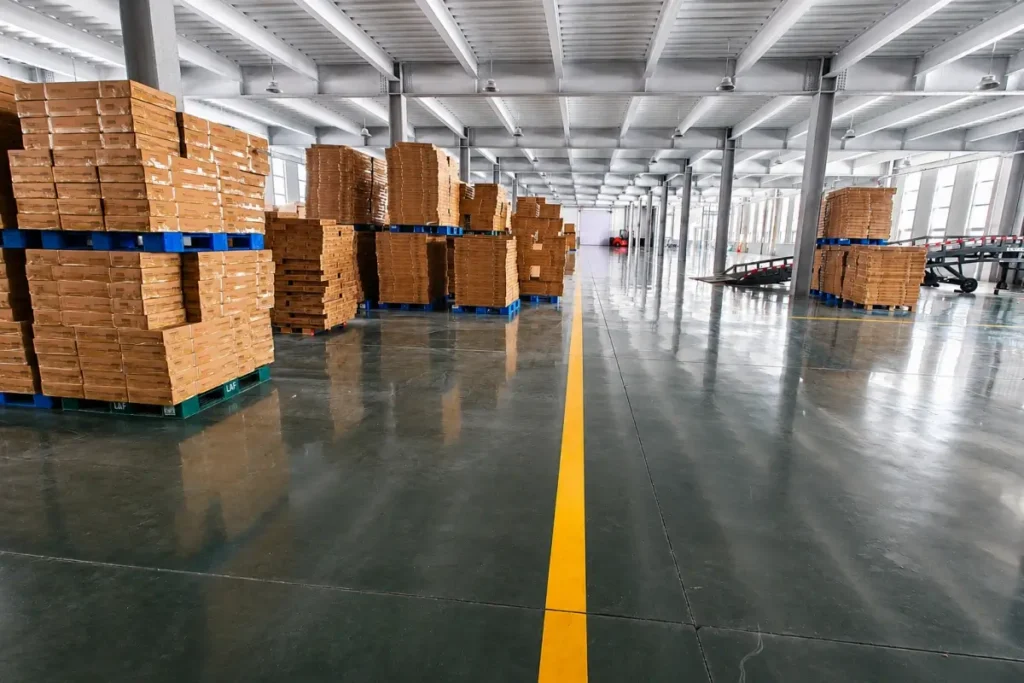
Palletised cartons illustrate bulk warehouse handling; they do not establish suitability for individual parcel delivery.
Start with the Sales and Delivery Channel
Start by asking how the shelving will be delivered, stored and resold. Sea freight, retail distribution and parcel delivery describe different stages of a journey; one order may involve all three. State where cartons will be removed from pallets and whether an outer shipping carton will be added.
Bulk Importer and Distributor Orders
For cartons handled together on pallets, priorities include stable stacking, accessible model identification, forklift handling and efficient use of shipment space. Confirm the receiving warehouse’s pallet and handling requirements. If cartons will later be shipped individually, the packaging must also address that later stage.
Retail and Private-Label Orders
A retail carton may need approved branding, product images, barcodes and the correct manual language. These requirements do not establish its transport performance. Confirm whether the printed carton travels as the shipping package or needs an outer carton or other protection.
Parcel and Mail-Order Shipments
Individual cartons may pass through sorting and handling stages without pallet support. Review component movement, exposed corners, carton closure and the buyer’s or carrier’s package limits. Where a retailer or distribution programme requires packaging tests, agree the applicable procedure and acceptance criteria before approval. A photo of an intact sample is not evidence that it has passed a transport test.
Define Carton Contents and Internal Protection
Protect Shelf Panels from Steel Components
For shelving with MDF or other board panels, inspect the points where metal edges can contact panel faces, edges and corners. Coated steel parts also need protection against rubbing. Specify the position and purpose of separators, bags, edge protection, bundling or other restraints rather than asking only for “standard export packing”.
Review the packed arrangement for three risks: parts moving into one another, sharp edges pressing against the carton and small fittings escaping from their designated location. Extra padding is useful only if it addresses a risk; it can also increase carton size and freight volume.
For a slot-in boltless shelving set, use the selected upright lengths, beam set and shelf panels to check what fits in each carton. Match the carton contents to the approved component list.
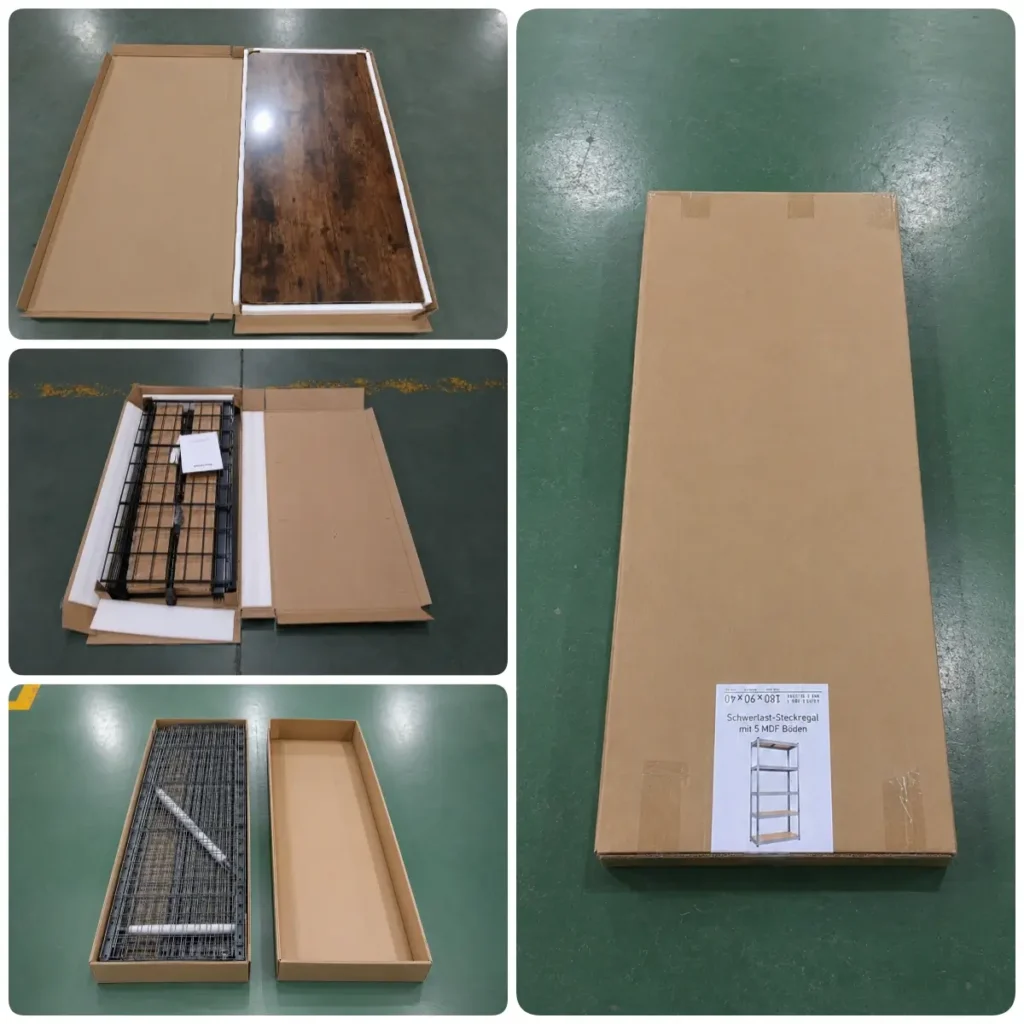
Where moisture exposure is a concern, agree a protection and storage approach for the route and materials involved. Do not assume that a stronger carton or stretch wrap alone resolves moisture risk.
Confirm Cartons, Labels and Shipping Requirements
Record Carton Construction and Packed Measurements
Record the carton style, material or board specification, closure method and internal arrangement. “Thicker carton” is not a complete specification. If strength or transport-test evidence is required, identify the agreed test and the package configuration to which the result applies.
Measure external length × width × height on the closed, packed carton and state the units. Record net weight as the weight of the contents excluding packaging, and gross weight as the carton contents plus their packaging. For a palletised shipment, record the loaded pallet’s dimensions and total gross weight separately, including the pallet and securing materials.
Recheck these values after changes to shelf material, component quantity, internal protection or units per carton. Use the same packaging basis when you compare storage shelving quotations; otherwise, a lower unit price may exclude protection or handling provisions included in another offer.
Control Labels and Artwork
Agree which product, SKU, carton-sequence and shipment references belong on each package. Identify the approved artwork, barcode, shipping-mark and manual files by model, language and revision. Buyer-specific or destination-specific text should be confirmed for the actual order.
Check the printed information after packing and, where applicable, palletising. Tape, folds or straps can cover a barcode or label that looked clear in the artwork. Detailed checks belong in the carton label and shipping-mark guide.

Printed cartons and long component packages require an agreed contents list and identification method.
Choose Pallet Packing for the Handling Route
Not every shelving order needs pallets. Palletisation can reduce individual carton handling and keep models grouped, but it adds weight, volume and material cost. Compare those trade-offs against the loading method and the receiving warehouse’s requirements.
If pallets are used, agree their type and footprint, cartons per pallet, loaded height and gross weight, stacking arrangement, securing method and label positions. Check that strapping and stacking do not damage cartons or panels.
For raw-wood pallets or dunnage, confirm the destination’s applicable phytosanitary requirements. ISPM 15 addresses wood packaging made from raw wood; packaging made wholly from qualifying processed wood, such as plywood, is treated differently under its scope. Do not assume that every wooden packaging item has the same requirements.
Calculate Loading From the Final Package
Use the approved carton or loaded-pallet dimensions and gross weights to review shipment quantity. A carton-volume calculation alone does not confirm a workable container load: layout, mixed models, payload, load distribution and cargo securing also matter.
For container shipments, ask the party responsible for packing and securing the cargo to review the loading plan. The IMO/ILO/UNECE CTU Code provides guidance on packing and securing cargo transport units.
Build and Approve the Packaging Specification
Bring the requirements into one controlled document. The following fields describe what to record; they are not a fixed packaging specification for every shelving model.
| Item | Requirement to Record |
|---|---|
| Product reference | Model, configuration, component list and revision. |
| Delivery route | Sales channel, transport stages, handling method and destination. |
| Carton contents | Sets and parts per carton; cartons per set where applicable. |
| Internal protection | Component positions, separators, edge protection, restraint and accessory packing. |
| Carton construction | Style, material specification, closure and any agreed performance requirements. |
| Packed measurements | External L × W × H, units, net contents weight and gross carton weight. |
| Identification files | Approved artwork, model/SKU labels, barcodes and shipping marks. |
| Instructions and spares | Manual model, language and revision; separately defined spare-part quantities. |
| Pallet arrangement | Required or not; pallet type, carton arrangement, loaded dimensions, weight and securing. |
| Loading basis | Final carton/pallet data and the reviewed shipment arrangement. |
| Approval evidence | Packed sample, measurements and any agreed inspection or test records. |
| Change control | Approved revision, approval date, responsible parties and unresolved deviations. |
Keep buyer requirements, supplier confirmation and any agreed deviations in the working approval document. For the final sign-off checks, use the OEM shelving packaging checklist.
Review a Packed Sample Before Release
Review the carton with the actual approved components inside it. Check the contents, arrangement, protection, accessory bag, closure, external measurements, weight and printed information. Open the sample to inspect contact points that cannot be judged from the outside.
A flat carton or artwork approval does not establish how the product fits. Photos can document the arrangement, but they do not replace agreed measurements or performance tests. Complete any required validation before releasing the affected packaging for production.

Keep Product and Packaging Revisions Together
A change from MDF panels to wire mesh, additional supports or a revised accessory pack can change the packing arrangement and weight. Reassess the affected protection, carton, labels and loading data rather than assuming the earlier approval still applies.
Record the change, its effect and who approved it. Purchasing, packing and quality-control teams should work from the same final reference, linked to the approved OEM shelving specification.
Frequently Asked Questions
Can Artwork Be Approved Before the Packed Sample?
Yes, as a separate approval stage. Record that artwork approval covers the files, not the complete package. Release the packaging for production only after the applicable packed-sample checks and any agreed tests have been completed.
Should Spare Parts Be Packed Inside Every Carton?
Only if that matches the agreed after-sales plan. Spares may be allocated per set or separately for the order. Define their quantity, identification and location without reducing the standard component quantity required for assembly.
Confirm the Packaging Before the Order Is Packed
Send QDDOWELL the shelving model or component drawing, order quantity, sales and delivery route, destination, and any carton-size, weight, artwork or pallet requirements. If the packing method is undecided, identify the handling stages so the product and packaging can be reviewed together.